


Enabling Advanced Broadcast Experiences with Multi-layer VVC Encoding
CASE STUDY
Author: Hiroyuki Komatsu, Senior Technical Support Engineer
An Introduction to Multi-layer VVC Encoding
As broadcast and streaming audiences demand ever-higher quality and more interactive viewing experiences, scalable encoding has become essential. Multi-layer encoding provides a flexible framework for delivering video at multiple resolutions and bitrates from a single source. This capability enables seamless transitions between 2K, 4K, and even 8K outputs while maintaining consistent visual quality and efficient bandwidth use.
When combined with hybrid broadcast delivery models that integrate over-the-air (OTA) and over-the-top (OTT) distribution, multi-layer encoding allows broadcasters and service providers to enhance their offerings with dynamic, context-aware content delivery. Using VVC, such content can be implemented in a variety of ways, including direct overlays and L-shaped banners. This allows a scalable approach to add content such as emergency alerts, sign language, server-side ad insertion, or real-time commentary, able to be added and switched on the fly without interrupting the primary stream.
MainConcept’s implementation of the Multilayer Main10 Profile of VVC enables precisely this level of flexibility and performance. By supporting multiple video layers and real-time sub-content integration, it lays the technical foundation for next-generation broadcast workflows that balance efficiency, quality, and interactivity.
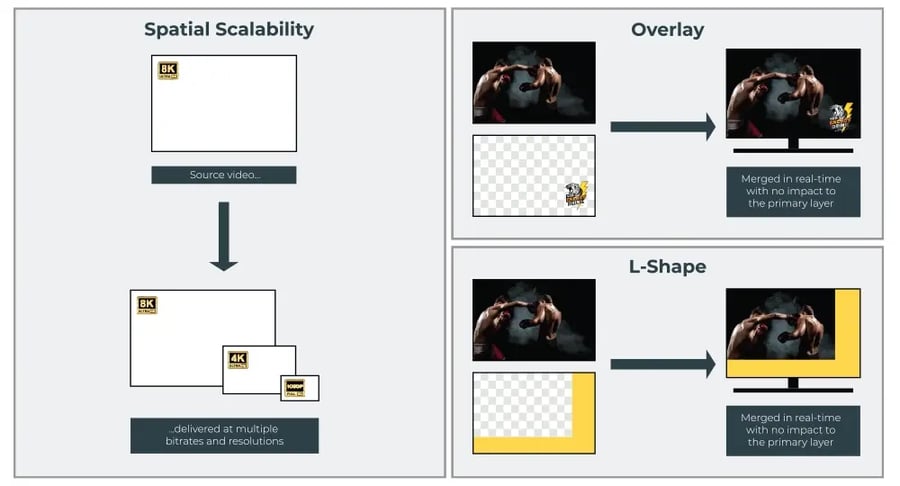 Exhibit 2: Example multi-layer implementations.
Technical Challenges
Implementing multi-layer video encoding requires more than simply stacking different resolutions of the video. Key challenges include:
- Maintaining base layer quality and low latency: Each layer must be encoded efficiently without degrading the primary stream or increasing end-to-end delay.
- Ensuring synchronization across heterogeneous inputs: Hybrid workflows often mix IP and SDI inputs, which must remain precisely timed for smooth playback.
- Supporting real-time overlays: Integrating graphics, alerts, and other visual elements dynamically requires additional layers that must remain perfectly aligned with the base content.
- Optimizing for processing efficiency: Multiple layers increase data complexity, demanding intelligent encoding strategies that avoid redundant processing.
MainConcept’s Approach
MainConcept addresses these challenges with a multi-layer VVC encoder designed for both live and on-demand applications. The encoder leverages the Multilayer Main10 Profile of the VVC standard to deliver efficient, high-quality streams across a range of resolutions and use cases.
At its core, the encoder performs several critical functions:
- Real-time encoding of base and enhancement layers (e.g., 2K, 4K, 8K), ensuring consistent quality and responsiveness for live and file-based workflows.
- Spatial scalability through inter-layer prediction, which reuses data from lower layers to reduce redundancy and improve overall compression efficiency.
- Sub-content encoding that supports transparent overlays such as sign language interpretation, advertising frames, or live commentary, enabling rich, interactive viewing experiences.
- Flexible overlay management, including both full-frame and L-shaped layouts that can be dynamically positioned or switched during operation.
These capabilities allow for efficient handling of complex video streams without sacrificing visual fidelity or latency performance. By separating base and enhancement layers, the encoder enables broadcasters and service providers to optimize bandwidth and storage resources while still supporting high-resolution, feature-rich content.
In practical terms, this architecture provides a powerful foundation for next-generation broadcast and streaming workflows. It simplifies the delivery of multi-resolution video while enabling real-time control over overlay and sub-content layers. Whether used for hybrid broadcast delivery, OTT streaming, or advanced production environments, MainConcept’s multi-layer VVC encoder brings together scalability, adaptability, and quality in a single, streamlined solution.
Performance and Applications
VVC is ideal for multi-layer insertion, which uses two bitstreams: one to layer the core program content and one to layer the ad. This architecture allows the full-length program to remain continuous, while targeted ads are overlaid on top of the content through a dedicated enhancement layer. The content is delivered to the existing ad servers operated by the ad providers or streaming services, where ad selection can be performed based on audience segmentation and viewing context.
Using MainConcept's multi-layer VVC encoder, the ads are embedded into the additional layer in real time, encoding only the necessary portions of the main video in an efficient way, enabling scalable, server-side advertising with multiple parallel instances optimized for different audience groups.
In this new era of ad-supported content, broadcasters and video service providers are challenged with keeping viewers engaged while delivering highly targeted and personalized ads without disrupting the continuity of the viewing experience. Achieving this level of targeting and scalability with conventional server-side ad insertion techniques has not been feasible before now.
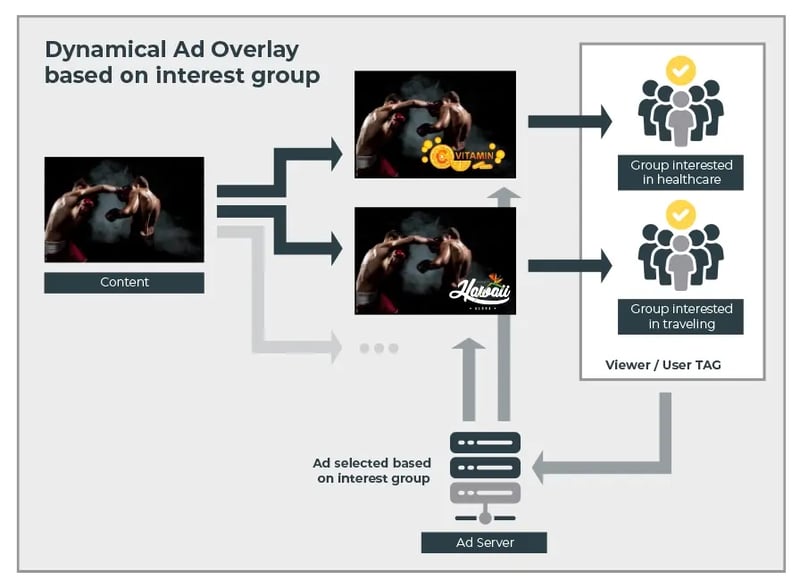 Exhibit 3: Sample server-side targeted ad insertion workflow.
Multi-layer VVC encoding demonstrates clear advantages in advanced broadcast environments:
- Efficient resource use: Inter-layer prediction and selective CTU processing reduce encoding complexity while maximizing quality.
- Real-time responsiveness: Low-latency operation supports live workflows with dynamic switching (e.g., overlay, L-shape, no-op).
- Interoperability: The encoder integrates easily with existing streaming and decoding systems, enabling rapid deployment into established infrastructures.
- Future-ready design: Support for higher resolutions and additional overlay layers ensures adaptability as broadcast standards evolve.
The technology has already proven effective in live demonstration environments, showing how broadcasters can use multi-layer encoding to deliver enhanced visual experiences that merge broadcast reliability with OTT flexibility.